
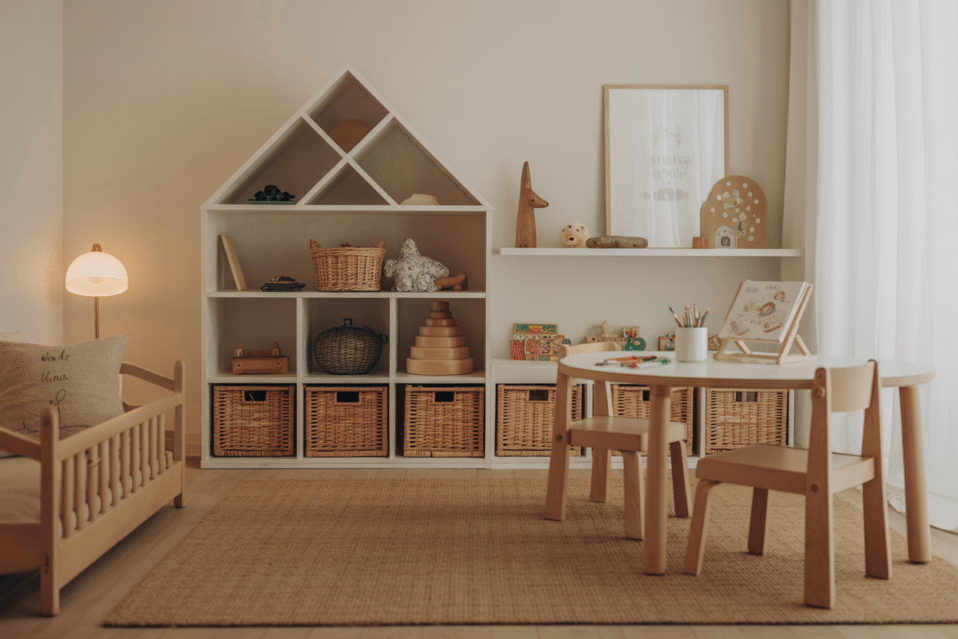
Introduction: make the playroom actually work (and not just look cute)
Looking for Top 7 Kids’ Playroom Decor Tips to Boost Learning, Imagination, and Calm right off the bat? You landed in the right place. I like to keep playrooms both playful and purposeful, so you get a space where kids learn, imagine, and actually calm down sometimes — yes, really. According to my experience, the best playroom decor tips focus on layout, storage, sensory balance, and a few smart tricks that save your sanity.
Ever walked into a “cute” playroom and wondered why your kid still dumps every toy on the floor? Me too. In my opinion, design should support behavior, not just aesthetics. I’ll walk you through practical, kid-tested ideas that I prefer when styling playrooms for families who want creativity and calm in equal measure.
Tip 1: Zone the room for focused play and calm
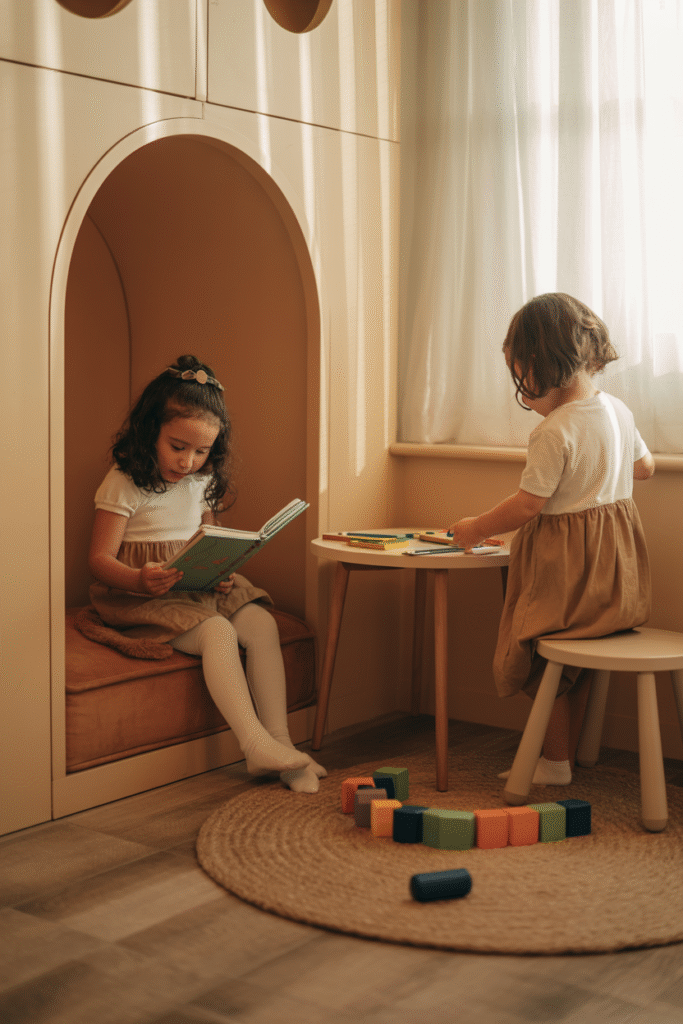
Kids need structure, even if they resist it loudly. Zoning gives the room purpose and helps children know where to read, build, or get noisy. I recommend creating at least three distinct zones: a creative zone, a quiet/reading zone, and an active play zone.
Why zoning matters
Zoning reduces overwhelm. When toys and activities have a “home,” kids shift more easily between activities. Have you noticed how a clearly defined reading nook makes kids more likely to sit and actually read? I have, repeatedly.
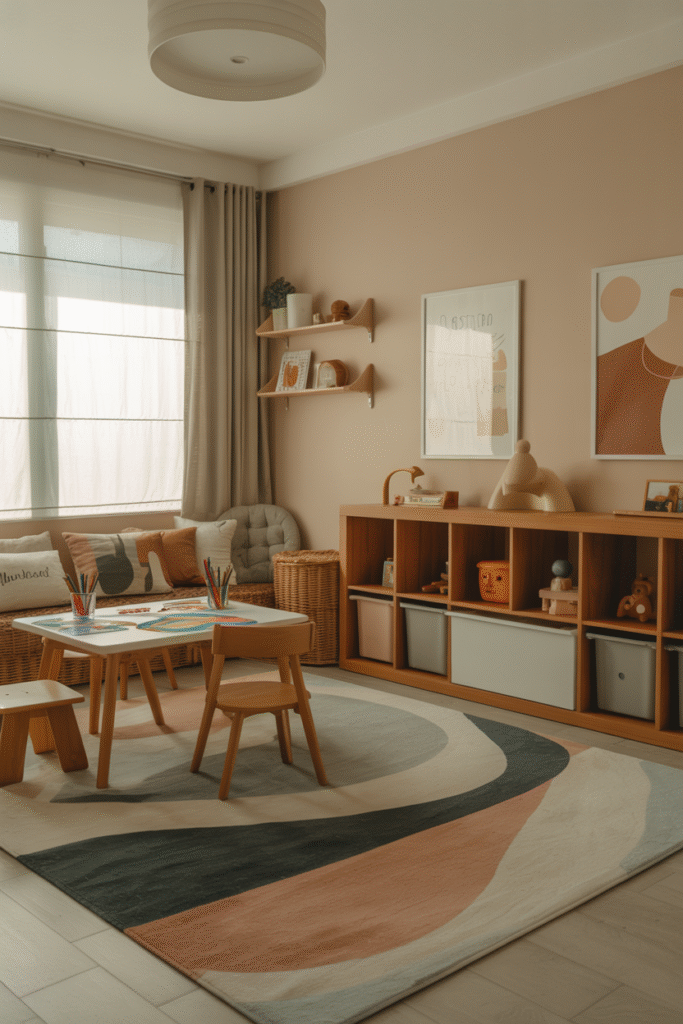
How to set up effective zones
- Creative zone: small table, washable surface, art storage within reach. I prefer low tables so kids can climb in and out without help.
- Quiet/reading zone: soft rug, bean bag or low bench, good lighting, a small bookshelf. Soft textures invite calm.
- Active play zone: open floor space, activity mats, a small indoor tent or playhouse. Keep this area away from fragile decor.
Quick setup checklist I use with clients
- Place zones so they flow logically, not in a strict grid.
- Use area rugs or low shelving to visually separate zones without blocking sightlines.
- Keep high-energy toys in one bucket or basket so you can contain the chaos quickly.
Tip 2: Make storage simple, reachable, and stylish
Storage wins the day. I recommend storage that kids can use independently. When storage looks like furniture instead of glorified plastic bins, the room feels calmer and you stop yelling “put it away” every five minutes.
Best storage types for real families
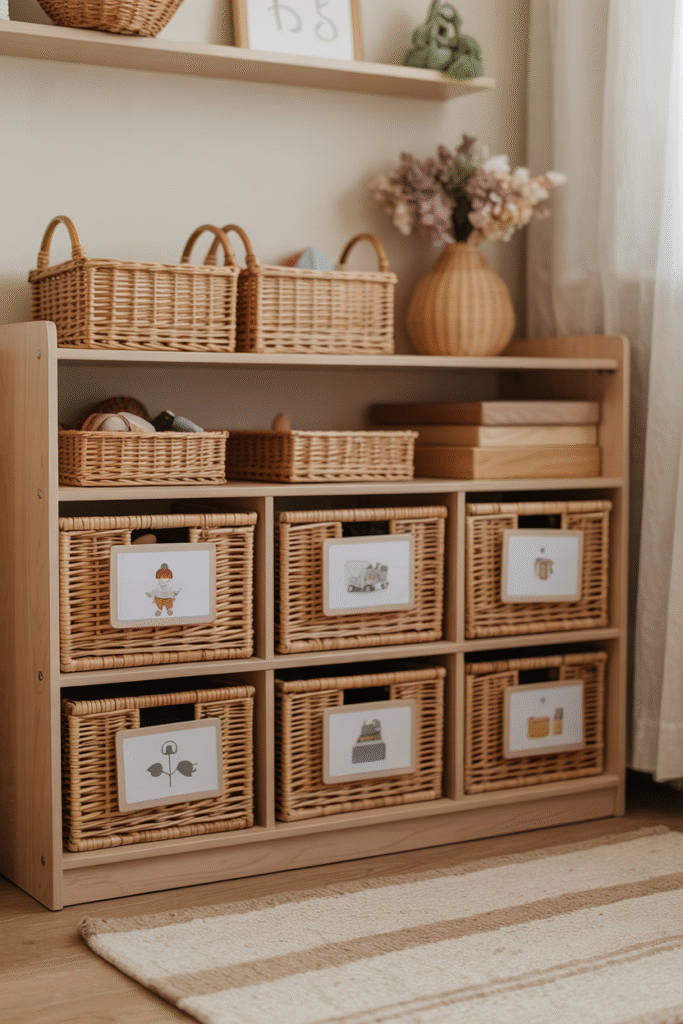
- Open bins and baskets on low shelves for frequently used toys. Kids can see and choose what they want.
- Labelled drawers or boxes (use pictures for pre-readers). I use clear bins for puzzles and opaque boxes for craft supplies. Both work if you keep labeling consistent.
- Multi-functional furniture like ottomans with storage or benches with lift-up seats. These pieces hide clutter and double as seating.
Toy rotation: less clutter, more play
I recommend rotating toys every 2 to 3 weeks. Put half the toys away in labeled bins and swap them out. Toy rotation keeps interest high and reduces mess.
How I run a rotation system:
- Sort toys into categories: building, pretend, sensory, and books.
- Store extras in clear bins labeled by category and keep them on a top shelf or closet.
- Swap a bin into the playroom weekly or biweekly. Kids treat rotated toys like new finds.
Practical storage tips I swear by
- Keep daily-use toys at child height. Independence reduces frustration.
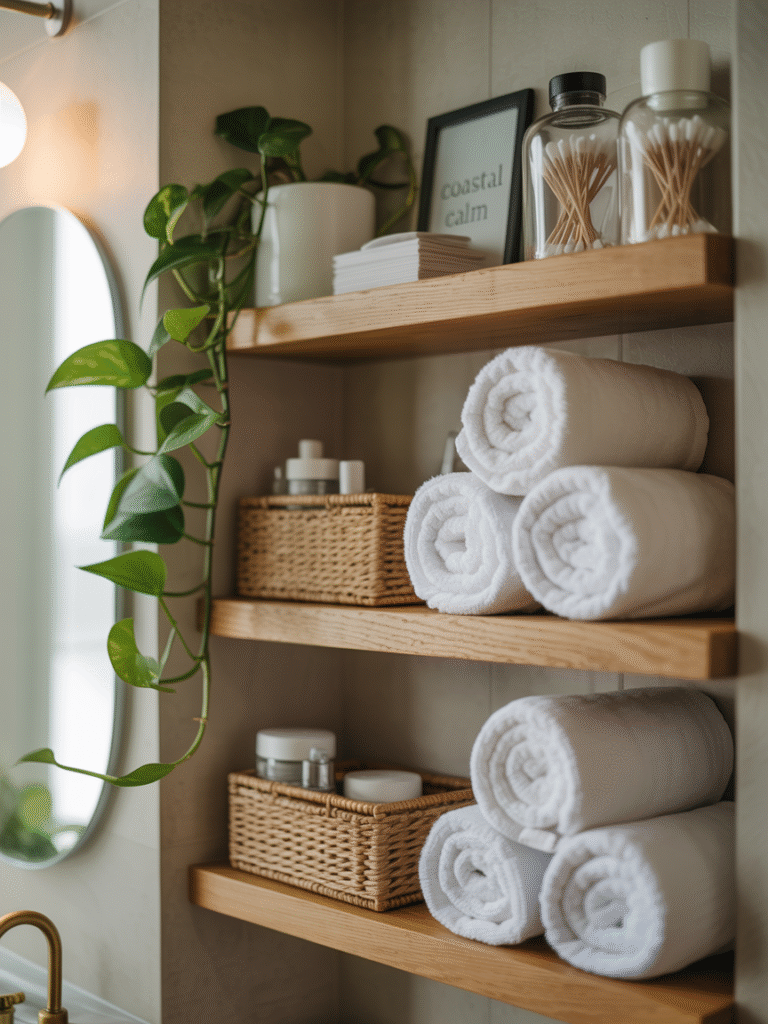
- Use uniform baskets to create visual calm. I prefer natural woven baskets for texture.
- Install a low hooks rail for dress-up clothes to encourage responsibility.
Tip 3: Choose calming colors with playful pops
Color affects mood more than most parents realize. I always recommend a calm base with controlled pops of color to spark imagination without overstimulating.
The palette strategy I use
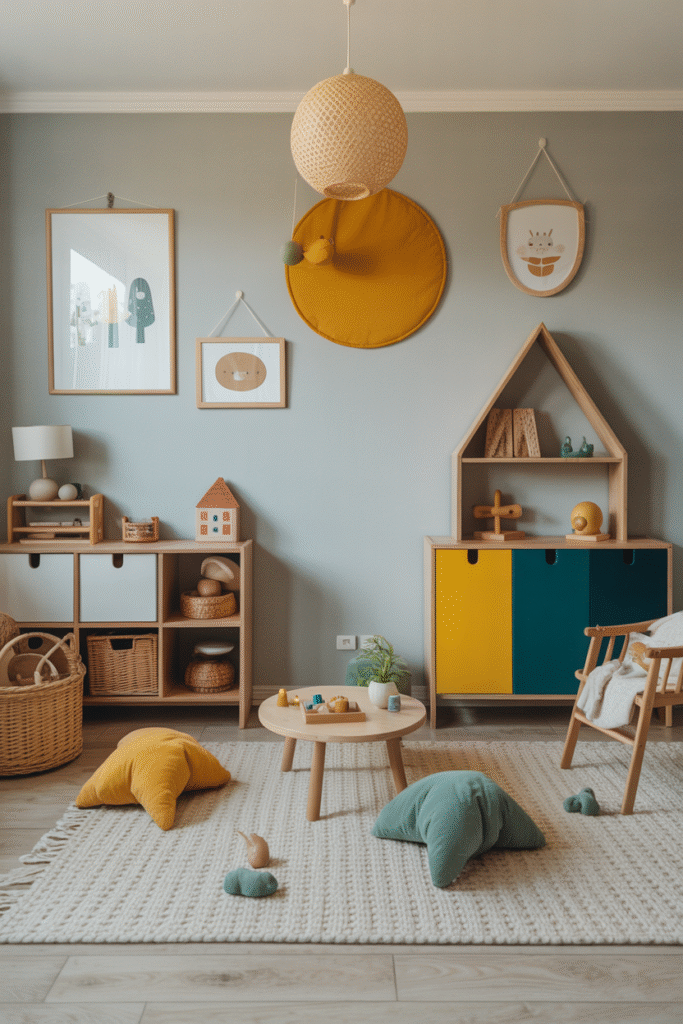
- Pick a neutral or muted base for walls and large furniture. Beige, warm white, or soft gray creates a calm backdrop.
- Add one or two bright accent colors through cushions, art, or a single statement wall. I like mustard yellow for energy or teal for a creative vibe.
- Use natural wood and soft textures to warm up the palette.
Why this works
Kids respond to contrast. A calm background lets colorful toys and artwork shine. Would you rather be in a room that screams for attention or one that invites focused play? I prefer the latter, every time.
Quick color-do list
- Paint the ceiling a lighter shade than the walls for a cozier feel.
- Choose washable paint for easy cleanup. I recommend satin finishes in play areas.
- Limit wall decals to one statement area so walls don’t get visually noisy.
Tip 4: Add sensory-friendly elements to support focus and emotional regulation
A good playroom isn’t just about toys — it’s about how the space makes kids feel. Sensory design plays a huge role in helping children calm down, focus better, and enjoy their playtime without getting overstimulated.
Why sensory elements matter
Kids are naturally sensory-seeking, and the right setup can actually guide that energy instead of letting it spiral into chaos. I’ve noticed that when a playroom includes even two or three soothing sensory features, kids settle in faster and meltdowns decrease.
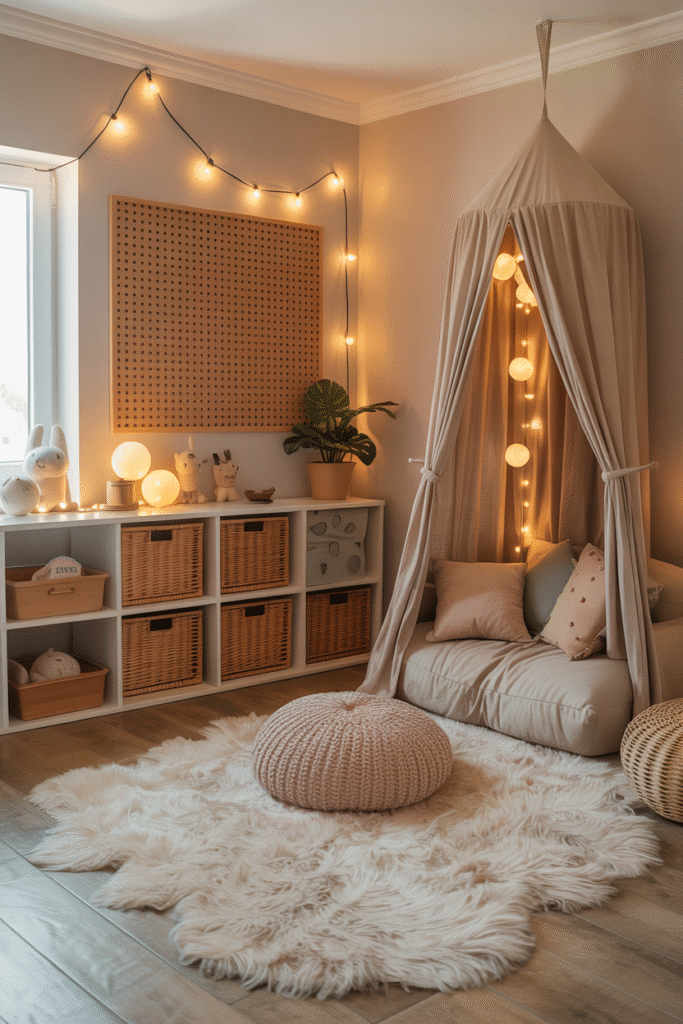
My favorite sensory-friendly additions
- Soft textures: Think plush rugs, knit poufs, and soft cushions. They create a grounding effect.
- A mini sensory corner: A small canopy with pillows, a weighted blanket, or a tactile wall panel. This becomes the “calm down” spot.
- Gentle lighting: String lights, warm lamps, or dimmable LEDs. Bright overhead lights often overstimulate kids.
- Sensory bins: Rotating bins with rice, beans, water beads (supervised), or kinetic sand keep curiosity high.
Quick sensory-balancing tips I rely on
- Avoid loud, buzzing LED toys in the reading/quiet zone.
- Add one tactile activity per zone so kids get a little sensory input everywhere.
- Keep textures consistent — too much variety becomes distracting rather than soothing.
Tip 5: Choose flexible furniture that grows with your child
Playrooms evolve quickly. What works at age 3 won’t work at age 7, so I always prefer adjustable, lightweight, or modular furniture that keeps up with growth spurts and changing interests.
Why flexible furniture is worth the investment
I’ve seen families re-buy entire playrooms just because the furniture was too “babyish” or too rigid. A few flexible pieces fix that problem. Plus, movable furniture means you can reconfigure the layout as your child’s needs change.
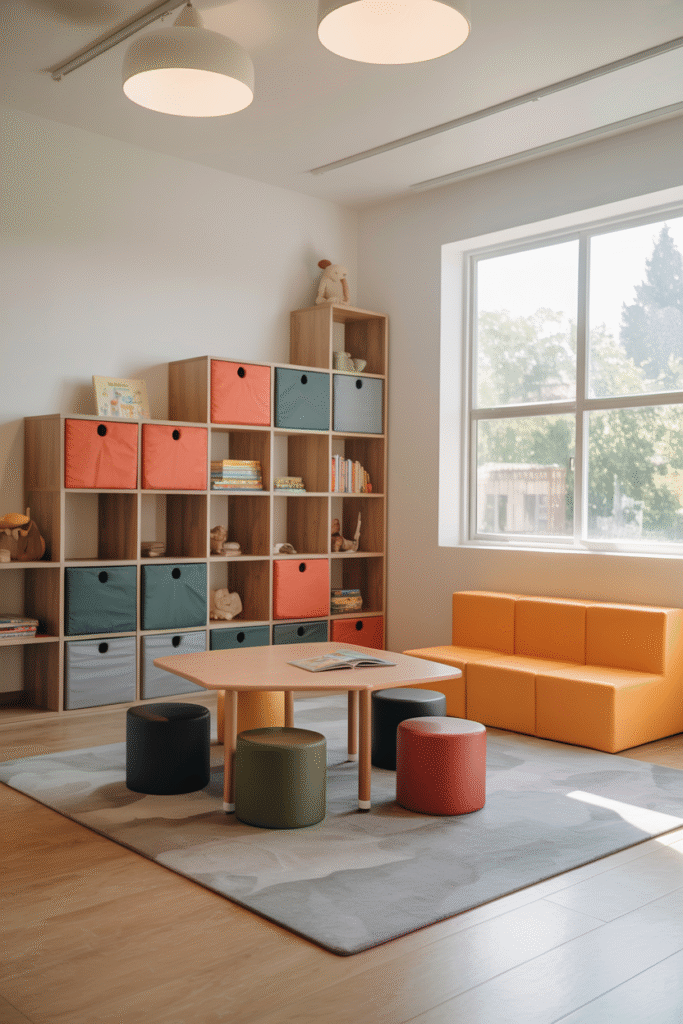
What I recommend for a future-proof playroom
- Modular shelves that can be stacked, separated, or turned into reading benches.
- Adjustable-height tables for arts, crafts, and early homework.
- Lightweight seating like foam sofas, stackable stools, or poufs kids can drag around.
- Foldable mats for tumbling, building forts, or active play.
My quick “furniture planning” checklist
- Keep pathways open so kids can move safely.
- Choose rounded edges whenever possible — trust me, your shins will thank you.
- Pick materials that are wipeable and durable. Kids will test the limits.
Tip 6: Create learning corners that spark curiosity
A playroom should feel like an invitation to learn — not a mini classroom that stresses kids out. I prefer learning corners that blend education with fun, making the space feel exciting and discovery-driven.
Why learning corners help
Kids engage more when learning doesn’t feel forced. Setting up small “micro-learning zones” encourages natural exploration and curiosity. In my experience, kids end up spending more time reading, building, and experimenting when those spaces are intentionally designed.
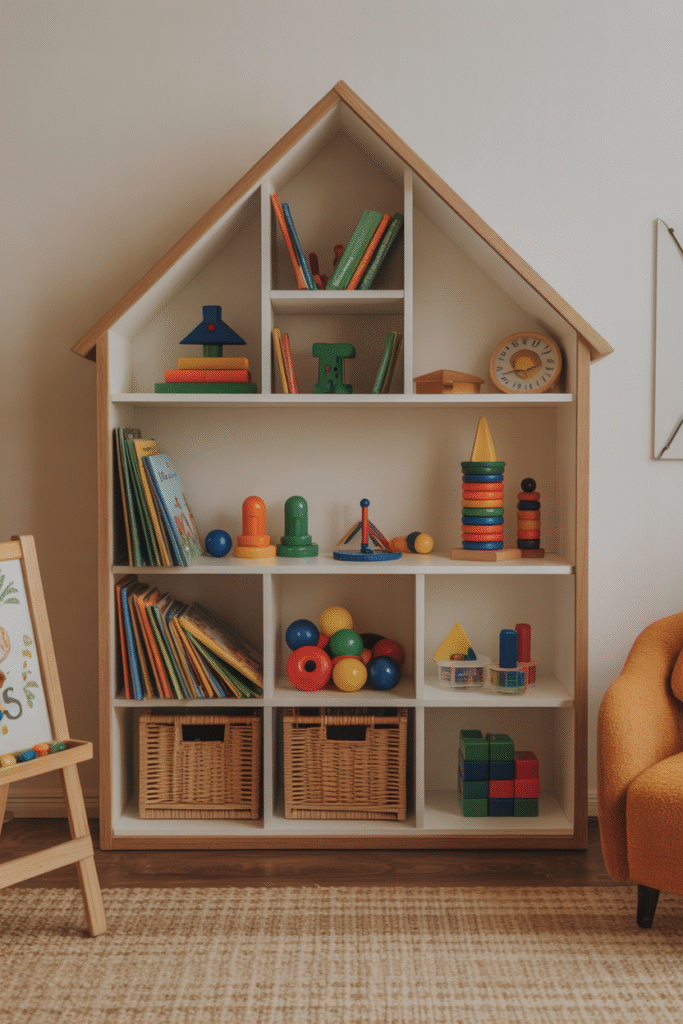
Simple learning corners to add
- Reading corner: A tiny cozy nook with a rotating mini-library.
- STEM corner: Building blocks, magnets, gears, simple puzzles, and science kits.
- Art corner: Easel, coloring supplies, paints (washable!), and paper storage.
- Pretend-play corner: A mini kitchen, toolkit, or doctor set.
My setup tips for learning zones
- Keep shelves low so kids can choose what interests them.
- Display a few items at a time instead of stuffing shelves—it boosts engagement.
- Use art clips or a mini cork board to display kids’ creations proudly.
Tip 7: Use playful organization hacks that encourage independence
If you’ve ever spent half your day picking up toys, this tip is for you. I love using playful organization tricks that make cleanup fun and clearly show kids what goes where.
Why playful organization works
Kids respond to visuals and routines. When storage is clear and appealing, they naturally take responsibility — or, at the very least, need fewer reminders.
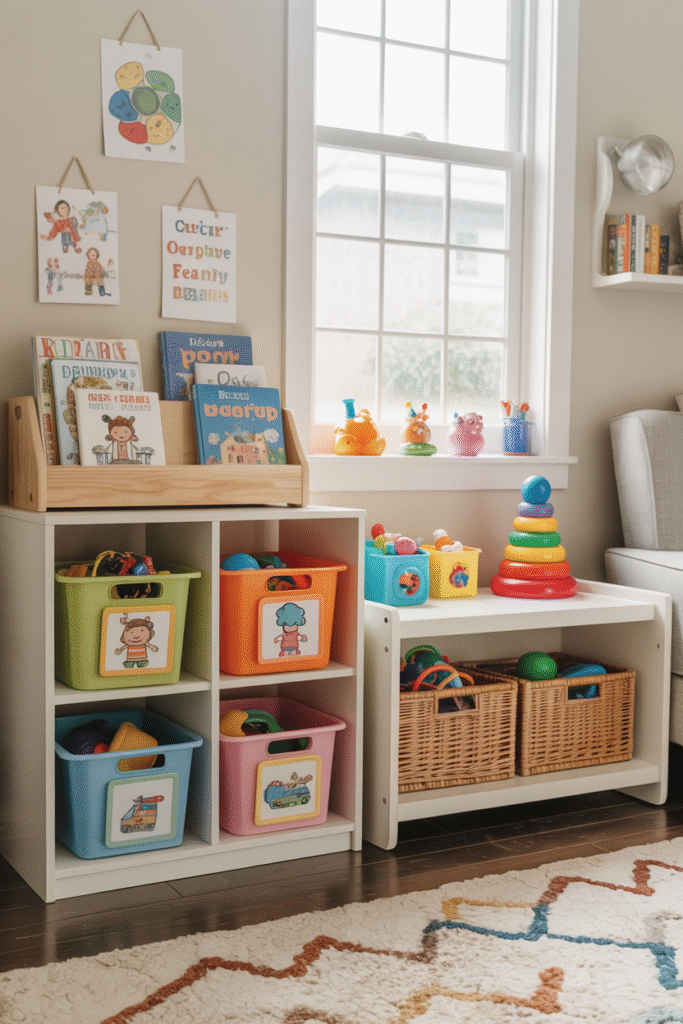
Organization hacks I swear by
- Color-coded baskets: Blue for blocks, yellow for cars, green for art supplies.
- Picture labels for non-readers. A simple printed photo works wonders.
- “One big bin” rule: Keep a single oversized basket for quick-cleanup days.
- Book display racks: Forward-facing shelves encourage kids to pick books independently.
Make cleanup enjoyable
- Put on a 2-minute cleanup song — works like a charm.
- Use baskets with handles so kids can carry them around.
- Turn cleanup into “sorting games” for younger kids.
Final Thoughts: A playroom that truly works
You now have all 7 playroom decor tips that boost learning, spark imagination, and help kids feel calmer — from zoning to storage to sensory elements and independence-based organization.
The whole goal is to create a space where kids can grow, explore, and feel at ease — while you enjoy a room that’s both beautiful and functional.


Recent Comments